Αρχειοθήκη ιστολογίου

Αλέξανδρος Γ. Σφακιανάκης
ΩτοΡινοΛαρυγγολόγος
Αναπαύσεως 5
Άγιος Νικόλαος Κρήτη 72100
2841026182
6032607174

Τετάρτη 14 Απριλίου 2021

Cancers, Vol. 13, Pages 1891: Tumor Solid Stress: Assessment with MR Elastography under Compression of Patient-Derived Hepatocellular Carcinomas and Cholangiocarcinomas Xenografted in Mice

xloma.fota13 shared this article with you from Inoreader
Via Cancers

cancers-13-01891-ag-550.jpg

Cancers, Vol. 13, Pages 1891: Tumor Solid Stress: Assessment with MR Elastography under Compression of Patient-Derived Hepatocellular Carcinomas and Cholangiocarcinomas Xenografted in Mice

Cancers doi: 10.3390/cancers13081891

Authors: Gwenaël Pagé Marion Tardieu Jean-Luc Gennisson Laurent Besret Philippe Garteiser Bernard E. Van Beers

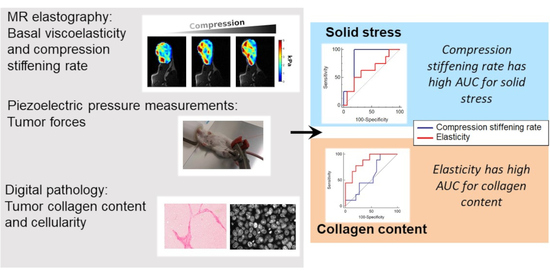
Malignant tumors have abnormal biomechanical characteristics, including high viscoelasticity, solid stress, and interstitial fluid pressure. Magnetic resonance (MR) elastography is increasingly used to non-invasively assess tissue viscoelasticity. However, solid stress and interstitial fluid pressure measurements are performed with invasive methods. We studied the feasibility and potential role of MR elastography at basal state and under controlled compression in assessing altered biomechanical features of malignant liver tumors. MR elastography was performed in mice with patient-derived, subcutaneously xenografted hepatocellular carcinomas or cholangiocarcinomas to measure the basal viscoelasticity and the compression stiffening rate, which corresponds to the slope of elasticity versus applied compression. MR elastography measurements were correlated with invasive pressure measurements and digital histological readings. Significant differences in MR elastography parameters, pres sure, and histological measurements were observed between tumor models. In multivariate analysis, collagen content and interstitial fluid pressure were determinants of basal viscoelasticity, whereas solid stress, in addition to collagen content, cellularity, and tumor type, was an independent determinant of compression stiffening rate. Compression stiffening rate had high AUC (0.87 ± 0.08) for determining elevated solid stress, whereas basal elasticity had high AUC for tumor collagen content (AUC: 0.86 ± 0.08). Our results suggest that MR elastography compression stiffening rate, in contrast to basal viscoelasticity, is a potential marker of solid stress in malignant liver tumors.

View on the web

Characteristics of esophageal motility and clinical presentation in gastroesophageal reflux disease patients of different age groups

xloma.fota13 shared this article with you from Inoreader

Zhonghua Yi Xue Za Zhi. 2021 Apr 13;101(14):1015-1019. doi: 10.3760/cma.j.cn112137-20200713-02110.

ABSTRACT

Objective: To explore the characteristics of esophageal motility and clinical presentation in gastroesophageal reflux disease (GERD) patients of different age groups. Methods: This was a case-control study. Confirmed GERD patients in the Department of Gastroenterology of Peking Union Medical College Hospital from January 2015 to September 2018 were enrolled and divided into two groups: elderly group (≥60 years old) and young and middle-aged group (<60 years old). Characteristics of gender, disease course, clinical symptoms, esophageal motility, gastroscopic manifestations and esophageal hiatus function of patients in the two groups were analyzed. Results: A total of 250 patients met the inclusion criteria, with 61 patients in elderly group and 189 in young and middle-aged group. There were no significant differ ences in gender ((male/female: 24/37 vs 78/111, P>0.05) and disease course((4.9±4.2) years vs(4.5±3.8)years, P>0.05) between the two groups. However, there were significant differences in typical symptoms (acid regurgitation and heartburn) and atypical symptoms (chest pain, cough, foreign body sensation in pharynx, etc.) (typical/atypical symptoms: 35/26 vs 146/43, P<0.01) between the two groups. Compared with young and middle-aged group, upper esophageal sphincter (UES) resting pressure was lower ((65±28) mmHg (1 mmHg=0.133 kPa)vs (74±28) mmHg, P<0.05), but the percentage of ineffective esophageal motility (IEM) (78.7%(48/61) vs 65.1%(123/189),P<0.05) and DeMeester score (16.3(6.0,36.3) vs 6.4(2.5,18.0), P<0.05) were higher in elderly group. There were no significant differences in lower esophageal sphincter (LES) resting pressure and distal contractile integral (DCI) between the two groups. Higher proportion of grade C and D reflux esophagitis,and grade C and D reflux esophagitis complicated with esophageal hiatus dysfunction was observed in elderly group compared with young and middle-aged group (2.04%(8/49) vs 0.65%(1/155); 14.29%(7/49) vs 0(0/155); both P<0.01). Pearson correlation analysis showed that there was a negative correlation between UES resting pressure and age(r=-0.145, P<0.05), while there was a positive correlation between the LES length and age (r=0.129, P<0.05). Conclusion: Compared with young and middle-aged GERD patients, the atypical symptoms, lower LES resting pressure, increased incidence of ineffective esophageal motility and acid exposure were more prominent in the elderly. Considering that anti-reflux function was weakened, long-term acid suppressants may be needed in elderly patients.

PMID:33845540 | DOI:10.3760/cma.j.cn112137-20200713-02110

View on the web

Botulinum toxin type A versus anticholinergics for cervical dystonia

xloma.fota13 shared this article with you from Inoreader

Cochrane Database Syst Rev. 2021 Apr 14;4:CD004312. doi: 10.1002/14651858.CD004312.pub3.

ABSTRACT

BACKGROUND: This is an update of a Cochrane Review first published in 2005. Cervical dystonia is the most common form of focal dystonia and is a highly disabling movement disorder, characterised by involuntary, usually painful, head posturing. Currently, botulinum toxin type A (BtA) is considered the first line therapy for this condition. Before BtA, anticholinergics were the most widely accepted treatment.

OBJECTIVES: To compare the efficacy, safety, and tolerability of BtA versus anticholinergic drugs in adults with cervical dystonia.

SEARCH METHODS: We searched the Cochrane Movement Disorders' Trials Register to June 2003, screened reference lists of articles and conference proceedings to September 2018, and searched CENTRAL, MEDLINE, and Embase, with no language restrictions, to July 2020.

SELECTION CRITERIA: Double-blind, p arallel, randomised trials (RCTs) of BtA versus anticholinergic drugs in adults with cervical dystonia.

DATA COLLECTION AND ANALYSIS: Two review authors independently assessed records, selected included studies, extracted data using a paper pro forma, and evaluated the risk of bias and quality of the evidence. We resolved disagreements by consensus or by consulting a third review author. If enough data had been available, we were to perform meta-analyses using a random-effects model for the comparison of BtA versus anticholinergic drugs to estimate pooled effects and corresponding 95% confidence intervals (95% CI). The primary efficacy outcome was improvement in cervical dystonia-specific impairment. The primary safety outcome was the proportion of participants with any adverse event.

MAIN RESULTS: We included one RCT of moderate overall risk of bias (as multiple domains were at unclear risk of bias), which included 66 BtA-naive participants with cervical dystonia. Two d oses of BtA (Dysport; week 0 and 8; mean dose 262 to 292 U) were compared with daily trihexyphenidyl (up to 24 mg daily). The trial was sponsored by the BtA producer. BtA reduced cervical dystonia severity by an average of 2.5 points (95% CI 0.68 to 4.32) on the Toronto Western Spasmodic Torticollis Rating Scale (TWSTRS) severity subscale 12 weeks after injection, compared to trihexyphenidyl. More participants reported adverse events in the trihexyphenidyl treatment group (76 events), compared with the BtA group (31 events); however, the difference in dropouts due to adverse events was inconclusive between groups. There was a decreased risk of dry mouth, and memory problems with BtA, but the differences were inconclusive between groups for the other reported side effects (blurred vision, dizziness, depression, fatigue, pain at injection site, dysphagia, and neck weakness).

AUTHORS' CONCLUSIONS: We found very low-certainty evidence that BtA is more effective, better tolerated, and safer than trihexyphenidyl. We found no information on a dose-response relationship with BtA, differences between BtA formulations or different anticholinergics, the utility of electromyography-guided injections, or the duration of treatment effect.

PMID:33852744 | DOI:10.1002/14651858.CD004312.pub3

View on the web

Recurrence of dysphagia post-myotomy: etiologies and management

xloma.fota13 shared this article with you from Inoreader

Rev Col Bras Cir. 2021 Apr 9;48:e20202973. doi: 10.1590/0100-6991e-20202973. eCollection 2021.

NO ABSTRACT

PMID:33852705 | DOI:10.1590/0100-6991e-20202973

View on the web

Cancers, Vol. 13, Pages 1891: Tumor Solid Stress: Assessment with MR Elastography under Compression of Patient-Derived Hepatocellular Carcinomas and Cholangiocarcinomas Xenografted in Mice

xloma.fota13 shared this article with you from Inoreader
Via Cancers

cancers-13-01891-ag-550.jpg

Cancers, Vol. 13, Pages 1891: Tumor Solid Stress: Assessment with MR Elastography under Compression of Patient-Derived Hepatocellular Carcinomas and Cholangiocarcinomas Xenografted in Mice

Cancers doi: 10.3390/cancers13081891

Authors: Gwenaël Pagé Marion Tardieu Jean-Luc Gennisson Laurent Besret Philippe Garteiser Bernard E. Van Beers

Malignant tumors have abnormal biomechanical characteristics, including high viscoelasticity, solid stress, and interstitial fluid pressure. Magnetic resonance (MR) elastography is increasingly used to non-invasively assess tissue viscoelasticity. However, solid stress and interstitial fluid pressure measurements are performed with invasive methods. We studied the feasibility and potential role of MR elastography at basal state and under controlled compression in assessing altered biomechanical features of malignant liver tumors. MR elastography was performed in mice with patient-derived, subcutaneously xenografted hepatocellular carcinomas or cholangiocarcinomas to measure the basal viscoelasticity and the compression stiffening rate, which corresponds to the slope of elasticity versus applied compression. MR elastography measurements were correlated with invasive pressure measurements and digital histological readings. Significant differences in MR elastography parameters, pres sure, and histological measurements were observed between tumor models. In multivariate analysis, collagen content and interstitial fluid pressure were determinants of basal viscoelasticity, whereas solid stress, in addition to collagen content, cellularity, and tumor type, was an independent determinant of compression stiffening rate. Compression stiffening rate had high AUC (0.87 ± 0.08) for determining elevated solid stress, whereas basal elasticity had high AUC for tumor collagen content (AUC: 0.86 ± 0.08). Our results suggest that MR elastography compression stiffening rate, in contrast to basal viscoelasticity, is a potential marker of solid stress in malignant liver tumors.

View on the web

Τρίτη 13 Απριλίου 2021

Severe Referred Shoulder Pain Following Revision Fundoplication From a Stich on the Diaphragm

xloma.fota13 shared this article with you from Inoreader

Am Surg. 2021 Apr 13:31348211011110. doi: 10.1177/00031348211011110. Online ahead of print.

ABSTRACT

Complications following fundoplication surgery for hiatal hernias are rare. Herein, we present the case of a 61-year-old woman who underwent a Nissen fundoplication, complicated by dysphagia, and a revision modified Toupet fundoplication for a hiatal hernia, after which she began to experience severe prandial referred left shoulder pain that was refractory to medical management. We hypothesized that a diaphragmatic suture placed during the revision fundoplication could be the source of the pain, and we elected to remove the suture, resulting in resolution of the pain. This pain remained resolved at the most recent follow-up on postoperative week six, and the patient had no further concerns.

PMID:33847159 | DOI:10.1177/00031348211011110

View on the web

Free from Dysphagia? A Test Battery to Differentiate Between Mild and No Dysphagia

xloma.fota13 shared this article with you from Inoreader

Dysphagia. 2021 Apr 12. doi: 10.1007/s00455-021-10295-3. Online ahead of print.

ABSTRACT

Assessing mild oropharyngeal dysphagia (OD) raises the question where to draw the line between normal and pathological swallowing. There is a lack of clinical test methods appropriate in the subacute phase of recovery from dysphagia following stroke and other brain injuries. The aim of this pilot study was to investigate the diagnostic accuracy of a new test battery, called the Swallow Battery (SwaB), in relation to Fiberoptic Endoscopic Evaluation of Swallowing (FEES). SwaB consists of the validated tests Repetitive Saliva Swallowing Test (RSST), Timed Water Swallowing Test (TWST) and parts of the Test of Masticating and Swallowing Solids (ToMaSS). Nineteen adult patients with acquired brain injury who were enrolled in a rehabilitation programme underwent the SwaB and a FEES, both resulting in a pass or fail outcome. The pass or fail results were based o n RSST's and TWST's suggested cutoffs, normative values of ToMaSS and on established rating scales used for FEES. The SwaB's ability to predict FEES results was 74% according to a binary logistic regression analysis, with a 92% correct prediction of fail results and 33% correct prediction of pass results. The ToMaSS was sensitive to small changes in eating ability, failing 13 out of 19 patients using 95% CI normative values as cutoff, including patients with a passed FEES. Alternative cutoffs were therefore suggested, depending on purpose of dysphagia assessment. The results of this study indicate that the SwaB may be a useful tool when assessing mild dysphagia following brain injury. Further studies of SwaB's validity and clinical utility are suggested.

PMID:33846833 | DOI:10.1007/s00455-021-10295-3

View on the web