Αρχειοθήκη ιστολογίου

Αλέξανδρος Γ. Σφακιανάκης
ΩτοΡινοΛαρυγγολόγος
Αναπαύσεως 5
Άγιος Νικόλαος Κρήτη 72100
2841026182
6032607174

Πέμπτη 4 Φεβρουαρίου 2021

Optimized EGFR blockade strategies in EGFR addicted gastroesophageal adenocarcinomas

xloma.fota13 shared this article with you from Inoreader

Purpose: Gastric and gastroesophageal adenocarcinomas (GEA) represent the third leading cause of cancer mortality worldwide. Despite significant therapeutic improvement, the outcome of patients with advanced GEA is poor. Randomized clinical trials failed to show a significant survival benefit in molecularly unselected patients with advanced GEA treated with anti-EGFR agents. Experimental Design: We performed analyses on 4 cohorts: IRCC (570 patients), FMI (9397 patients), COG (214 patients) and INT (206 patients). Preclinical trials were conducted in patient-derived xenografts (PDXs). Results: The analysis of different GEA patient cohorts suggests that EGFR amplification drives aggressive behaviour and poor prognosis. We also observed that EGFR inhibitors are active in patients with EGFR copy number gain and that co-amplification of other receptor tyrosine kinases or KRAS is associated with worse response. Pre-clinical trials performed on EGFR-amplified G EA PDX models revealed that the combination of an EGFR monoclonal antibody and an EGFR tyrosine kinase inhibitor was more effective than each monotherapy and resulted in a deeper and durable response. In a highly EGFR amplified non-responding PDX, where resistance to EGFR drugs was due to inactivation of the TSC2 tumor suppressor, co-treatment with the mTOR inhibitor everolimus restored sensitivity to EGFR inhibition. Conclusions: This study underscores EGFR as a potential therapeutic target in gastric cancer and identifies the combination of an EGFR TKI and a monoclonal antibody as an effective therapeutic approach. Finally, it recognizes mTOR pathway activation as a novel mechanism of primary resistance that can be overcome by the combination of EGFR and mTOR inhibitors.

View on the web

Expression of the ace operon in Escherichia coli is triggered in response to growth rate-dependent flux-signal of ATP

xloma.fota13 shared this article with you from Inoreader
ABSTRACT
The signal that triggers the expression of the ace operon and, in turn, the transition of central metabolism's architecture from acetogenic to gluconeogenic in Escherichia coli remains elusive despite extensive research both in vivo and in vitro. Here, with the aid of flux analysis together with measurements of the enzymic activity of isocitrate lyase (ICL) and its aceA-messenger ribonucleuc acid (mRNA) transcripts, we provide credible evidence suggesting that the expression of the ace operon in E. coli is triggered in response to growth rate-dependent threshold flux-signal of adenosine triphosphate (ATP). Flux analysis revealed that the shortfall in ATP supply observed a s the growth rate ($\mu $) diminishes from µmax to ≤ 0.43h−1 ($ \pm 0.02;n4)\ $is partially redressed by up-regulating flux through succinyl CoA synthetase. Unlike glycerol and glucose, pyruvate cannot feed directly into the two glycolytic ATP-generating reactions catalyzed by phosphoglycerokinase and pyruvate kinase. On the other hand, glycerol, which upon its conversion to D-glyceraldehyde, feeds into the phosphorylation and dephosphorylation parts of glycolysis including the substrate-level phosphorylation-ATP generating reactions, thus preventing ATP flux from dropping to the critical threshold signal required to trigger the acetate-diauxic switch until glycerol is fully consumed. The mRNA transcriptional patterns of key gluconeogenic enzymes, namely, ackA, acetate kinase; pta, phosphotransacetylase; acs, acetyl CoA syntheta se and aceA, ICL, suggest that the pyruvate phenotype is better equipped than the glycerol phenotype for the switch from acetogenic to gluconeogenic metabolism.

View on the web

Comprehensive analysis of allergen-specific IgE in COPD: mite-specific IgE specifically related to the diagnosis of asthma-COPD overlap

xloma.fota13 shared this article with you from Inoreader

13223.jpg

Although the relationship between allergic sensitization and increased respiratory symptoms of chronic obstructive pulmonary disease (COPD) has been suggested, which allergen has a significant effect on COPD p...
View on the web

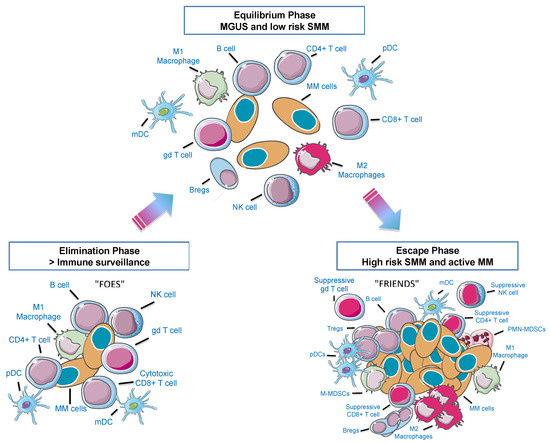
Cancers, Vol. 13, Pages 625: The Immune Microenvironment in Multiple Myeloma: Friend or Foe?

xloma.fota13 shared this article with you from Inoreader
Via Cancers

cancers-13-00625-g001-550.jpg

Cancers, Vol. 13, Pages 625: The Immune Microenvironment in Multiple Myeloma: Friend or Foe?

Cancers doi: 10.3390/cancers13040625

Authors: Raquel Lopes Joana Caetano Bruna Ferreira Filipa Barahona Emilie Arnault Carneiro Cristina João

Multiple myeloma (MM) is one of the most prevalent hematological cancers worldwide, characterized by the clonal expansion of neoplastic plasma cells in the bone marrow (BM). A combination of factors is implicated in disease progression, including BM immune microenvironment changes. Increasing evidence suggests that the disruption of immunological processes responsible for myeloma control ultimately leads to the escape from immune surveillance and resistance to immune effector function, resulting in an active form of myeloma. In fact, one of the hallmarks of MM is the development of a permissive BM milieu that provides a growth advantage to the malignant cells. Consequently, a better understanding of how myeloma cells interact with the BM niche compartments and disrupt the immune homeostasis is of utmost importance to develop more effective treatments. This review focuses on the most up-to-date knowledge regarding microenvironment-related mechanisms behind MM immune evasion and su ppression, as well as promising molecules that are currently under pre-clinical tests targeting immune populations.

View on the web

Cocktail of carbohydrases from Aspergillus niger: an economical and eco-friendly option for biofilm clearance from biopolymer surfaces

xloma.fota13 shared this article with you from Inoreader

13568.jpg

Biofilm formation on both biotic and abiotic surfaces accounts for a major factor in spread of antimicrobial resistance. Due to their ubiquitous nature, biofilms are of great concern for environment as well as...
View on the web

Τετάρτη 3 Φεβρουαρίου 2021

Apotex Corp. Issues Voluntary Nationwide Recall of Enoxaparin Sodium Injection, USP Due to Mislabeling of Syringe Barrel Measurement Markings

xloma.fota13 shared this article with you from Inoreader
Audience: Consumer, Patient, Health Professional, Pharmacy February 03, 2021 -- Apotex Corp is voluntarily recalling two (2) batches of Enoxaparin Sodium Injection, USP to consumer level due to a packaging error resulting in some syringes barrels...
View on the web

Turbulence and turbulent flow structures in a ventricular assist device—A numerical study using the large‐eddy simulation

xloma.fota13 shared this article with you from Inoreader
Turbulence and turbulent flow structures in a ventricular assist device—A numerical study using the large‐eddy simulation

In this article the turbulence and turbulent flow structures in a ventricular assist device (VAD) are investigated in detail. First, the VAD flow is computed using the turbulence resolving large‐eddy simulation method. Then, the turbulent flow state within an axial VAD is globally quantified with a self‐developed evaluation method. Subsequently, local turbulent flow structures are investigated. The structures found are universal and can be expected in every axial blood pump. Finally, the relevance of these structures for the blood damage prediction will be highlighted.


Abstract

Numerical flow simulations that analyze the turbulent flow characteristics within a turbopump are important for optimizing the efficiency of such machines. In the case of ventricular assist devices (VADs), turbulent flow characteristics must be also examined in order to improve hemocompatibility. Turbulence increases the shear stresses in the VAD flow, which can lead to an increased damage to the transported blood components. Therefore, an understanding of the turbulent flow patterns and their significance for the numerical blood damage prediction is particularly important for flow optimizations in VADs in order to identify and thus minimize flow regions where blood could be damaged due to high turbulent stresses. Nevertheless, the turbulence occurring in VADs and the local turbulent structures that lead to increased turbulent stresses have not yet been analyzed in detail in these machines. Therefore, this study aims to investigate the turbulence in an axial VAD in a comprehensive and double tracked way. First, the flow in an axial VAD was computed using the large‐eddy simulation method, and it was verified that the majority of the turbulence was directly resolved by the simulation. Then, the turbulent flow state of the VAD was quantified globally. For this purpose, a self‐designed evaluation method, the power loss analysis, was used. Subsequently, local flow regions and flow structures were identified where significant turbulent stresses prevail. It will be shown that the identified regions are universal and will also occur in other axial blood pumps as well, for example, in the HeartMate II.

View on the web