Αρχειοθήκη ιστολογίου

Αλέξανδρος Γ. Σφακιανάκης
ΩτοΡινοΛαρυγγολόγος
Αναπαύσεως 5
Άγιος Νικόλαος Κρήτη 72100
2841026182
6032607174

Κυριακή 17 Ιουλίου 2022

Offset analgesia is increased intra‐orally

alexandrossfakianakis shared this article with you from Inoreader

Abstract

Background

Offset analgesia (OA) is commonly used to quantify endogenous pain inhibition. However, the potential role of afferent inputs and the subsequent peripheral factors from different body areas on the underlying mechanisms are still unclear.

Objectives

The aim of this cross-sectional study was to compare the magnitude of OA in four different body areas representing a) glabrous and non-glabrous skin, b) trigeminal and extra-trigeminal areas, and c) intra- and extra-oral tissue.

Methods

OA was assessed at the oral mucosa of the lower lip, at the skin of the cheek, the forearm and the palm of the hand in 32 healthy and pain-free participants. OA testing included two trials: (1) a constant trial (30 seconds of constant heat stimulation at an individualized temperature of Pain50 (pain intensity of 50 out of 100)), and (2) an offset trial (10 seconds of individualized Pain50, followed by 5 seconds at Pain50+1°C and 15 seconds at Pain50). Participants continuously rated their pain during each trial with a computerized visual analog scale.

Results

A significant OA response was recorded at the oral mucosa (p<0.001, d=1.24), the cheek (p<0.001, d=0.84) and the forearm (p<0.001, d=1.04), but not at the palm (p=0.19, d=0.24). Significant differences were shown for OA recorded at the cheek versus the mucosa (p=0.02), and between palm and mucosa (p=0.007), but not between the remaining areas (p>0.05).

Conclusion

This study suggests that intra-oral endogenous pain inhibition assessed with OA is enhanced and supports the role of peripheral mechanisms contributing to the OA response.

View on Web

Πέμπτη 14 Ιουλίου 2022

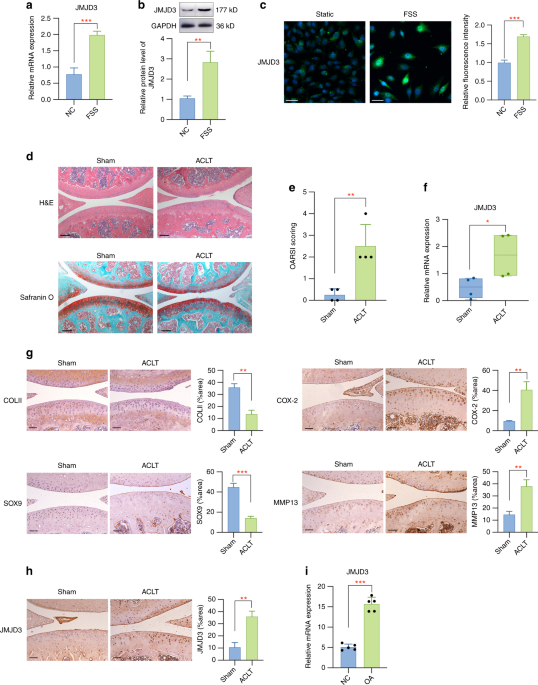
Histone demethylase JMJD3 downregulation protects against aberrant force-induced osteoarthritis through epigenetic control of NR4A1

alexandrossfakianakis shared this article with you from Inoreader

41368_2022_190_Fig1_HTML.png

View on Web

Changes in the occlusal function of orthognathic patients with vertical malformations after combined orthodontic surgical therapy: a prospective clinical study

alexandrossfakianakis shared this article with you from Inoreader
The aim of this study was to assess the changes in occlusal patterns during combined surgical and orthodontic therapy in patients with vertical jaw malformations. Twenty-six orthognathic patients (18 female, eight male; median age 25 years, interquartile range 11.5 years) and 10 control patients (five female, five male; median age 29.8 years, interquartile range 13.5 years) recruited from neutral configured patients attending the Department of Orthodontics, were investigated. Based on cephalometry, the patients were grouped into vertical skeletal configurations of either open, deep, or natural bite cases. (Source: International Journal of Oral and Maxillofacial Surgery)
View on Web

PP1 catalytic isoforms are differentially expressed and regulated in human prostate cancer

alexandrossfakianakis shared this article with you from Inoreader

1-s2.0-S0014482722X00141-cov150h.gif

Publication date: Available online 14 July 2022

Source: Experimental Cell Research

Author(s): Juliana Felgueiras, João Lobo, Vânia Camilo, Isa Carneiro, Bárbara Matos, Rui Henrique, Carmen Jerónimo, Margarida Fardilha

View on Web

Postoperative Gabapentin's Effect on Opioid Consumption and Pain Control Following Sinonasal Surgery

alexandrossfakianakis shared this article with you from Inoreader

Objective

This study investigates the impact of postoperative gabapentin on opioid consumption and pain control following endoscopic sinus surgery (ESS) and/or septoplasty.

Methods

Patients who underwent ESS and/or septoplasty at a single institution from 2021 to 2022 were enrolled. All patients received postoperative hydrocodone-acetaminophen for pain control. Half of the patients were also prescribed gabapentin for the first postoperative day in addition to hydrocodone-acetaminophen. Subjects completed the Revised American Pain Society Patient Outcome Questionnaire 24 h and 7 days after surgery. We conducted a multivariable regression analysis to assess opioid consumption and improvement in pain scores in the first week between gabapentin and non-gabapentin groups.

Results

A total of 102 subjects, 51 in each arm, were enrolled. The mean age was 52 years and 53% of participants were female. Controlling for important baseline demographic, clinical, and surgically related variables, the addition of postoperative gabapentin was associated with a 44% (9.5 mg from 21.6 mg) reduction in opioids consumed in the first postoperative week (B = −9.54, 95% C.I. = [−17.84, −1.24], p = 0.025). In addition, patients in both arms exhibited similar improvement in pain severity and sleep interference in the first 7 days (B = −1.59, 95% C.I. = [−5.03, 1.84], p = 0.36).

Conclusion

To the best of our knowledge, this is the first study to investigate the impact of postoperative gabapentin on opioid consumption and pain control following ESS and/or septoplasty. Our analysis demonstrated that postoperative gabapentin effectively reduced opioid use during the first postoperative week without compromising pain control.

Level of Evidence

3 Laryngoscope, 2022

View on Web

Image‐Guided Surgical Device Failures in Functional Endoscopic Sinus Surgery: A MAUDE Analysis

alexandrossfakianakis shared this article with you from Inoreader
Image-Guided Surgical Device Failures in Functional Endoscopic Sinus Surgery: A MAUDE Analysis

Image-guided surgery (IGS) devices have become widely used for anatomic localization during functional endoscopic sinus surgery (FESS). However, there are no studies that analyze the post-market complications associated with IGS device use during FESS. This study queried the US Food and Drug Administration's Manufacturer and User Facility Device Experience database for event reports associated with neurological stereotaxic devices utilized in IGS between the dates of January 1, 2016 and December 31, 2020. Of the medical device reports between 2016 and 2020, less than 3% resulted in adverse events.


Objective

Image-guided surgery (IGS) devices have become widely used for anatomic localization during functional endoscopic sinus surgery (FESS). However, there are no studies that analyze the post-market complications associated with IGS device use during FESS. The objective of this study was to better characterize post-market complications associated with the use of IGS devices during sinus surgery.

Methods

The US Food and Drug Administration's Manufacturer and User Facility Device Experience database was queried for event reports associated with neurological stereotaxic devices utilized in IGS between the dates of January 1, 2016 and December 31, 2020. Medical device reports that were analyzed for this study pertained strictly to FESS.

Results

There were 1873 reports involving IGS devices for FESS included in this study. Fifty-five reports involved adverse events to patients (2.9%) and 1818 (97.1%) involved device malfunctions. Of the adverse events to patients, the most common included cerebrospinal fluid leakage (45.6%), tissue damage (12.7%), and nervous system injury (3.6%). The most commonly reported device malfunction was imprecision (21.1%).

Conclusion

IGS devices are widely utilized in FESS. Of the medical device reports between 2016 and 2020, less than 3% resulted in adverse events. Further studies of the infrequent post-market complications of IGS devices used in FESS can help guide surgeons on the risks of their clinical use.

Level of Evidence

4—Retrospective database survey without controls Laryngoscope, 2022

View on Web

Safety and Immunogenicity of COVID‐19 Vaccination in Patients with Hepatocellular Carcinoma (CHESS‐NMCID 2101): A Multicenter Prospective Study

alexandrossfakianakis shared this article with you from Inoreader

ABSTRACT

Data on safety and immunogenicity of coronavirus disease 2019 (COVID-19) vaccinations in hepatocellular carcinoma (HCC) patients are limited. In this multicenter prospective study, HCC patients received 2 doses of inactivated whole-virion COVID-19 vaccines. The safety and neutralizing antibody were monitored. Totally, 74 patients were enrolled from 10 centers in China, and 37 (50.0%), 25 (33.8%), and 12 (16.2%) received the CoronaVac, BBIBP-CorV, and WIBP-CorV, respectively. The vaccines were well tolerated, the injection site pain (6.8% [5/74]) and anorexia (2.7% [2/74]) were the most frequently local and systemic adverse events. The median level of neutralizing antibody was 13.5 (interquartile range [IQR]: 6.9-23.2) AU/mL at 45 (IQR: 19-72) days after the second dose of vaccinations, and 60.8% (45/74) of patients had positive neutralizing antibody. Additionally, lower gamma-glutamyl transpeptidase level was related to positive neutralizing antibody (odds r atio = 1.022 [1.003-1.049], p = 0.049). In conclusion, this study found that inactivated COVID-19 vaccinations are safe and the immunogenicity is acceptable or hyporesponsive in patients with HCC. Given that the potential benefits may outweigh the risks and the continuing emergences of novel severe acute respiratory syndrome coronavirus 2 variants, we suggest HCC patients to be vaccinated against COVID-19. Future validation studies are warranted.

This article is protected by copyright. All rights reserved.

View on Web