Αρχειοθήκη ιστολογίου

Αλέξανδρος Γ. Σφακιανάκης
ΩτοΡινοΛαρυγγολόγος
Αναπαύσεως 5
Άγιος Νικόλαος Κρήτη 72100
2841026182
6032607174

Τετάρτη 26 Οκτωβρίου 2022

Influence of genetic polymorphisms on mechanical pain sensitivity and endogenous pain modulation of trigeminal and spinal areas

alexandrossfakianakis shared this article with you from Inoreader

Abstract

Background

Previous evidence indicates significant association between genetic polymorphisms and phenotypes related to pain sensitivity in patients with temporomandibular disorders (TMD). Despite the important advances in cataloging diverse factors such as sleep disorders, anxiety and depression, the interrelated mechanisms of painful TMD etiopathogenesis still need investigation.

Objectives

This case-control study aimed to evaluate the influence of genetic polymorphisms (rs6296, rs6295, rs1799971, rs4680, rs4633, rs4818) and psychosocial factors on the mechanical pain sensitivity and endogenous pain modulation in women with painful TMD and asymptomatic controls.

Methods

We evaluated six independent variables: anxiety levels, depression, stress, sleep quality, pain catastrophizing and genetic polymorphisms, and four dependent variables: mechanical pain threshold (MPT), pressure pain threshold (PPT), wind-up ratio (WUR) and conditioned pain modulation (CPM) collected at masseter (trigeminal) and hand (spinal) areas in a sample of 95 painful TMD patients and 85 controls. A regression model was used to test the possible effect of the independent variables on dependent variables.

Results

The regression model was significant for MPT (F11,168 = 9.772; R2=0.390). Painful TMD diagnoses and sleep quality were associated with trigeminal MPT (B coefficient = -0.499; and B coefficient = -0.211, respectively). WUR was associated with rs6295 and rs6746030 for, respectively, the spinal and trigeminal area.

Conclusion

Genetic polymorphisms had a slight contribution to endogenous pain modulation as indicated by the significant association with WUR but did not contribute to mechanical pain sensitivity. On the other hand, the presence of painful TMD and the sleep quality contributed significantly to mechanical pain sensitivity.

View on Web

Τρίτη 25 Οκτωβρίου 2022

Second‐degree burn induced by high‐concentration topical capsaicin with mobility sequelae: a case report

alexandrossfakianakis shared this article with you from Inoreader

Abstract

High-concentration topical capsaicin is used as a second line treatment for neuropathic pain. Transient, mild burning sensation and erythema are expected adverse drug reactions. Here, we report the first case of second degree burn after the application of a high-concentration topical capsaicin patch with secondary mobility sequelae. Nine months after the application, neuropathic pain still remained and the patient described mobility difficulties in daily activities, preventing her from returning to work. This report aims to raise the question of the benefit/risk ratio of high concentration topical capsaicin.

View on Web

Effect of adhesive strategy on resin cement bonding to dentin

alexandrossfakianakis shared this article with you from Inoreader

Abstract

Objective

The cement bonding strategy and the polymerization mode can influence the prognosis of indirect restorations. The microtensile bond strength (μTBS) and dentin endogenous enzymatic activity of a dual-cure resin cement (PV5) used in combination with two dentin surface conditioners (accelerator-enhancer primer, TP or universal adhesive, UA) were evaluated.

Materials and Methods

PV5 was used to lute composite overlays after dentin treatment with TP or UA. The resin cement was self-cured, SC (1 h at 37 °C) or dual-cured, DC (20 s light-cure followed by 15 min self-cure at 37°C). The μTBS test, fractographic analysis, and the in situ zymography evaluations were performed after 24 h (T 0) or 1 yr (T 12) of artificial storage. Data were statistically analyzed (α = 0.05).

Results

TP/DC obtained the highest adhesive strengths (45 ± 9 and 36.6 ± 8), while UA/SC (17 ± 8 and 11 ± 4) the lowest, both at T 0 and T 12, respectively. DC resulted in superior bonding values than the SC, independent of the dentin surface treatment (p < 0.05). The type of adhesive, curing mode and aging influenced the gelatinolytic activity (p < 0.05).

Conclusions

The dual-cure resin cement used in combination with its accelerator-enhancer primer showed superior bonding performances with respect to universal adhesive. Dual-curing the resin cement was determinant to enhance bonding capability over time, independent of the adhesive strategy.

Clinical Relevance

Clinicians must be aware to faithfully follow manufacturer's recommendation regarding the adhesive strategy suggested with the resin cement used.

View on Web

Tone in Noise Detection in Children with a History of Temporary Conductive Hearing Loss

alexandrossfakianakis shared this article with you from Inoreader
AbstractChildren with a history of temporary conductive hearing loss (CHL) during early development may show long-term impairments in auditory processes that persist after restoration of normal audiometric hearing thresholds. Tones in noise provide a simplified paradigm for studying hearing in noise. Prior research has shown that adults with sensorineural hearing loss may alter their listening strategy to use single-channel energy cues for tone-in-noise (TIN) detection rather than rove-resistant envelope or spectral profile cues. Our objective was to determine the effect of early CHL on TIN detection in healthy children compared to controls. Children ages 4 –7 years, with and without a history of CHL due to otitis media with effusion (OME) before age 3 years, participated in a two-alte...
View on Web

Δευτέρα 24 Οκτωβρίου 2022

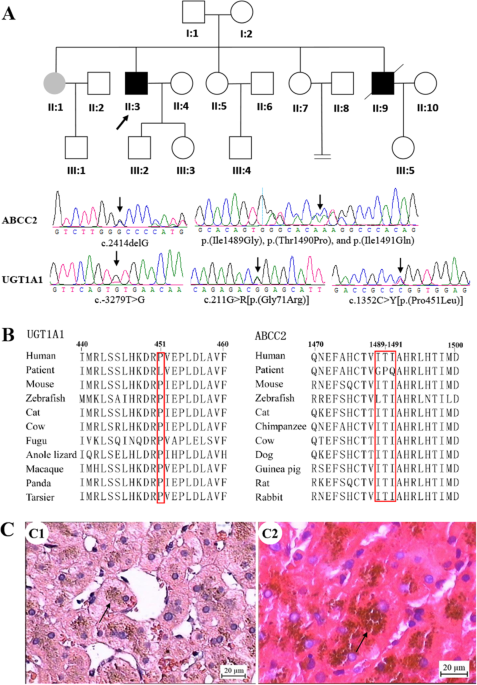
Concurrence of novel mutations causing Gilbert’s and Dubin–Johnson syndrome with poor clinical outcomes in a Han Chinese family

alexandrossfakianakis shared this article with you from Inoreader

10038_2022_1086_Fig1_HTML.png

Journal of Human Genetics, Published online: 24 October 2022; doi:10.1038/s10038-022-01086-1

Concurrence of novel mutations causing Gilbert's and Dubin–Johnson syndrome with poor clinical outcomes in a Han Chinese family
View on Web

Association between circulating 25‐hydroxyvitamin D metabolites and periodontitis: Results from the NHANES 2009‐2012 and Mendelian randomization study

alexandrossfakianakis shared this article with you from Inoreader

Abstract

Aim

This study sought to investigate associations of 25(OH)D metabolites with periodontitis, and to assess causality using Mendelian randomization (MR).

Methods

This study included 7,246 participants of the National Health and Nutrition Examination Survey, 2009–2012. The association of periodontitis with 25(OH)D metabolites was assessed using multivariable logistic regression analysis. 2-sample MR for 25(OH)D, 25(OH)D3, and C3-epi-25(OH)D3 with periodontitis (n = 17,353 cases/28,210 controls) was conducted. The principal analysis was inverse-variance-weighted approach. We controlled for horizontal pleiotropy using five additional methods.

Results

Based on the observational study, each 1-point increase in standard deviation of 25(OH)D lowered the risk of periodontitis by 15% (OR = 0.85, 95% CI: 0.78–0.93, P = 0.006) after multivariable adjustment. A similar relationship was observed between 25(OH)D3 and periodontitis (OR = 0.88, 95% CI: 0.80–0.97, P = 0.031). Furthermore, a potential nonlinear association was found between periodontitis with both 25(OH)D and 25(OH)D3. However, C3-epi-25(OH)D3 was not found to be associated with periodontitis risk. IVW-MR showed that periodontitis risk was not significantly associated with genetically increased levels of 25(OH)D (OR = 1.02, 95% CI: 0.90–1.16, P = 0.732), 25(OH)D3 (OR = 1.04, 95% CI: 0.93–1.17, P = 0.472), and C3-epi-25(OH)D3 (OR = 1.11, 95% CI: 0.87–1.41, P = 0.400). The pleiotropy-robust MR approaches yielded similar results after we had eliminated the variants with horizontal pleiotropy risk.

Conclusion

Cross-sectional observational analysis identified significant relationships between periodontitis with 25(OH)D metabolites, while findings based on MR study do not support a causal role.

This article is protected by copyright. All rights reserved.

View on Web

Κυριακή 23 Οκτωβρίου 2022

human monkeypox (hMPXV) re‐emergence: host immunity status and current vaccines landscape

alexandrossfakianakis shared this article with you from Inoreader

Abstract

Monkeypox virus is a member of the Orthopoxvirus genus and the Poxviridae family. Orthopoxviruses are among the most intricate animal viruses. The pathogenicity of human monkeypox infection has been emphasized in response to its recent emergence in non-endemic countries and the threat of bioterrorism. It is always necessary to take appropriate precautions in exposure to emerging or re-emerging infections. Here, we focus on the current state of the human monkeypox infection outbreak, research & development of immunity responses and clinical interventions to prevent and treat human monkeypox virus and other human poxviruses.

This article is protected by copyright. All rights reserved.

View on Web