Αρχειοθήκη ιστολογίου

Αλέξανδρος Γ. Σφακιανάκης
ΩτοΡινοΛαρυγγολόγος
Αναπαύσεως 5
Άγιος Νικόλαος Κρήτη 72100
2841026182
6032607174

Πέμπτη 28 Ιανουαρίου 2021

COVID-19 Survivor Shares Cochlear Implant Journey after After Sudden Single-Sided Deafness

Greek DailyNews shared this article with you from Inoreader
Via Audiology

The American Cochlear Implant Alliance (ACI Alliance) has published the account of Michael Goldsmith, a COVID-19 survivor who was implanted with a cochlear implant after experiencing sudden single-sided deafness.

Michael, a married father of two living in New Jersey, contracted a severe case of COVID in the spring of 2020. He was hospitalized for 32 days, including time spent on a ventilator in a medically induced coma. After he woke from the coma in March and returned home, he realized he had lost his hearing in his left ear. Prior to his hospitalization, he had not been aware of having hearing loss. After months of research and appointments with specialists, Michael received a cochlear implant at NYU Langone Health in September 2020—six months after his release from the hospital. Several months post-surgery, his results with the cochlear implant have been characterized by his medical
team as "remarkable pr ogress."

Less than six months from his cochlear implant surgery, Michael has adapted to his "new normal" with his cochlear implant and is back to working at his full time job in IT, back to listening to music with headphones, and back to interacting with his family and friends in a way remarkably similar to what he was able to do before.​

Editor's note: The original material ​was provided by ACI. The accuracy of information in thi s press release is the responsibility of the source, and opinions expressed are not necessarily the views of The Hearing Journal. Read more at bit.ly/Hjbreakingnews.​
Published: 1/26/2021 9:59:00 AM
View on the web

Face masks inhibit communication for 95 percent of people with hearing loss, new survey finds

Greek DailyNews shared this article with you from Inoreader
Via Audiology

​Ninety-five percent of people living with hearing loss in the United States say masks and facial coverings impact their ability to communicate during the COVID-19 pandemic, which has also heightened levels of anxiety, social isolation and other mental health-related effects among nearly half of the nation's hearing loss community.1

This is according to a new survey conducted by the Hearing Loss Association of America (HLAA), the nation's leading organization representing consumers with hearing loss, in partnership with Cochlear Limited, the global leader in implantable hearing solutions. Hearing loss is an invisible disease that affects almost 50 million Americans.2 The online survey of 1,399 participants sought to find out the pandemic's impact on those in the hearing loss community, including individuals with hearing loss, their loved ones and their hearing health care professionals. Key findings include:

Hearing Loss and the Pandemic
  • 70 percent of those with hearing loss say they are more aware of their hearing loss due to the pandemic, and 47 percent say they are more eager to explore hearing loss solutions due to the pandemic.
  • 46 percent notice their hearing loss influencing other aspects of their mental health since the pandemic began, with:
    • 67 percent having feelings of anxiety
    • 63 percent having feelings of isolation
    • 47 percent having feelings of loneliness
    • 22 percent having feelings of confusion
    • 21 percent having feelings of forgetfulness
  • 52 percent say they feel less connected to friends and family as a result of their hearing loss during the pandemic.
Hearing Loss and Accessibility
  • 95 percent of the hearing loss community say face masks/coverings have cr eated communication barriers since the pandemic began.
  • 89 percent report experiencing accessibility issues since the pandemic began (including but not limited to the ability to lipread due to face masks, physical distancing making conversations harder and not having access to captioning across all technology platforms).
  • 35 percent say they have experienced a lack of empathy from others for their hearing loss during the pandemic.

"Hearing and understanding are two different things. With masks, I can hear you, but I don't always understand you," said Lori A. Mertes, NBCT, MEd, MAT, special education teacher and bimodal hearing recipient (a cochlear implant in one ear, and a hearing aid in the other). "Given we all may be challenged to hear with masks right now, I hope others will understand the challenges many of us in the hearing loss community face on a regular basis and now have amplified because of masks and distancing. Please slow down, speak clearly, be patient with us, and if we ask to you to repeat, please don't say, 'never mind.' It's very frustrating to be dismissed."

Hearing Loss and Technology 

  • 68 percent of those with hearing loss have increased their use of technology during the pandemic to communicate with others.
  • 68 percent say pandemic-related increased use of technology has caused them to become more aware of their hearing loss.
  • 55 percent say their hearing loss creates challenges while using technology to communicate, while 45 percent use assistive hearing devices that make it easier to communicate.

"With the prolonged pandemic, I did not realize the mental stress and fatigue culminated over time would add to the challenges to understand with masks," said Tim Browning, digital communication and web specialist, HLAA, and bilateral hea ring aid user (a hearing aid in each ear). "I am missing the day-to-day practice of listening and talking to people in face-to-face situations. Online communications and captioning are wonderful, but to effectively hear requires continual practice hearing in all situations. When we get out of practice, it becomes harder and harder to understand with masks, so we then have to advocate for ourselves all that much more."

"Research has long shown untreated hearing loss can negatively impact a person's quality of life – and with masks and distancing, the impact the pandemic has had on people with hearing loss is enormous," said Barbara Kelley, Executive Director, HLAA. "The survey results reinforce the overwhelming challenge with masks for the hearing loss community, and many requested that the larger population invest in safe, clear face masks. Additionally, the hearing loss community would like to see universal captioning provided across all technology platforms. I hope co ming out of this pandemic we will see people continue to take their hearing loss seriously and treat it appropriately, as well as continue to see greater standards on accessibility to help those with hearing loss."

Hearing Loss and Hearing Health Care

  • 87 percent of hearing health care providers say they have seen increased signs of loneliness or isolation in their patients since the pandemic began.*
  • 84 percent of hearing health care providers say they have noticed an increase in their patients' awareness of their hearing loss during the pandemic, and 52 percent say they have seen an increase in their patients' desire to explore new hearing loss solutions due to the pandemic.*
  • 51 percent of those with hearing loss report their hearing health care provider offers remote care options, and 36 percent say they have used, or have thought of using, remote care options during the pandemic.

"Many individuals with hearing loss and their loved ones are now realizing how important hearing and connection is to our overall quality of life. While the pandemic has challenged our ability to hear and connect, this realization is empowering consumers to act and seek treatment for their hearing loss," said Patricia Trautwein, MA, AuD, Vice President, Product Management & Marketing, Cochlear Americas. "We hope given the results of this survey, individuals, health care professionals and payors will focus on prioritizing hearing health and begin setting standards around protecting our hearing, monitoring hearing loss and ensuring individuals have access to and can obtain appropriate treatment for their hearing loss."

Survey Demographics

  • 85 percent of respondents are age 55 and up.
  • Respondents' gender skews female at 69 percent.
  • Respon dents represent 49 of 50 states, plus Puerto Rico.
  • 52 percent of those with hearing loss have been diagnosed with hearing loss for over 30 years; 77 percent have hearing aids, and 32 percent have (a) cochlear implant(s).
  • Of the respondents, 1,298 (93 percent) identify as individuals with hearing loss or individuals acting as a representative for someone with hearing loss, and 57 (4 percent) identify as "other," which includes individuals who are both of the hearing loss community and a hearing health care professional, those who work as advocates for individuals with hearing loss, and other professionals whose work revolves around the hearing loss community.*

In the United States, one out of three people over the age of 65 and half of people over 75 are affected by disabling hearing loss, 3 but appropriate hearing treatment and technology continues to be widely underutilized.4  Research continues to show agin g adults with untreated hearing loss can be substantially affected by social isolation and loneliness with impacts to brain health and quality of life.5

If you or a loved one notice a change in hearing or suspect a hearing loss, see these resources for help:

REFERENCES:
  1. COVID-19 & its Impact on the HLAA Community survey. Survey of 1,399 conducted by Survey Monkey, October 10-31, 2020. Data on file.
  2. Hearing Loss Basics [Internet]. Hearing Loss Association of America; c2020 [cited 15 Dec 2020]. Available from: https://www.hearingloss.org/hearing-help/hearing-loss-basics/.
  3. Hearing Loss and Older Adults [Internet]. National Institute on Deafness and Other Communication Disorders; c2018 [cited 26 Nov 2020]. Available from: https://www.nidcd.nih.gov/health/hearing-loss-older-adults.
  4. Market penetration. This figure is a global estimate based on Cochlear sourced data.
  5. Brody, J. E. (2018, December 31). Hearing Loss Threatens Mind, Life and Limb. Available from: https://www.nytimes.com/2018/12/31/well/live/hearing-loss-threatens-mind-life-and-limb.html.
Editor's note: The original material ​was provided by Cochlear. The accuracy of information in this press release is the responsibility of the source, and opinions expressed are not necessarily the views of The Hearing Journal. Read more at bit.ly/Hjbreakingnews.
Published: 1/26/2021 12:23:00 PM
View on the web

Telephone triage is effective in identifying nasal fractures that require manipulation

Greek DailyNews shared this article with you from Inoreader

Abstract

Acute nasal fracture is one of the commonest referrals to the ENT emergency clinic. Many patients attending the clinic reported little or no change in the external appearance of their nose, so a telephone triage service was developed to identify patients that would benefit from a face‐to‐face appointment for manipulation. The telephone triage system led to a reduction in nasal fracture face‐to‐face appointments by half (from 16.8% to 8.5% of the total). Patients that underwent a review after a telephone triage had a greater requirement for manipulation (49.7% compared to 29.6% in the control group). The telephone triage strategy led to a two‐fold improvement in utilisation of outpatient capacity in the National Health Service by reducing the need for face‐to‐face appointments, and by decreasing patients' non‐attendance to their appointments. Although in place prior to the coronavirus disease 2019 pandemic, the telephone triage service was particularly useful as an alternative way of working to reduce the need for face‐to‐face interaction. Further work is needed to explore the scope of telemedicine in ENT.

View on the web

Sialendoskopie

Greek DailyNews shared this article with you from Inoreader
Via HNO

106.jpg

Zusammenfassung

Zur Behandlung von Speichelsteinen steht dem behandelnden Arzt eine Vielzahl von Behandlungsmodalitäten zur Verfügung, wobei in den vergangenen Jahrzehnten zusehends mehr Augenmerk auf drüsenerhaltende, minimal-invasive Techniken der Steinentfernung gelegt wurde. Einen großen Stellenwert hierbei hat die Sialendoskopie, also die zu diagnostischen und therapeutischen Zwecken einsetzbare Visualisierung der Speichelgänge mit semirigiden Endoskopen. Der vorliegende Artikel gibt einen Überblick über Indikationen und Durchführung der Sialendoskopie und bettet diese Behandlungsoption in den Gesamtkontext der übrigen therapeutischen Maßnahmen zur Steinextraktion ein.

View on the web

Auswirkungen der SARS-CoV‑2-Pandemie auf die universitäre Hals-Nasen-Ohren-Heilkunde im Bereich der Forschung, Lehre und Weiterbildung

Greek DailyNews shared this article with you from Inoreader
Via HNO

106.jpg

Zusammenfassung

Hintergrund

Ab Frühjahr 2020 kam es zur weltweiten Verbreitung von SARS-CoV‑2 mit der heute als erste Welle der Pandemie bezeichneten Phase ab März 2020. Diese resultierte an vielen Kliniken in Umstrukturierungen und Ressourcenverschiebungen. Ziel unserer Arbeit war die Erfassung der Auswirkungen der Pandemie auf die universitäre Hals-Nasen-Ohren(HNO)-Heilkunde für die Forschung, Lehre und Weiterbildung.

Material und Methoden

Die Direktorinnen und Direktoren der 39 Universitäts-HNO-Kliniken in Deutschland wurden mithilfe einer strukturierten Online-Befragung zu den Auswirkungen der Pandemie im Zeitraum von März bis April 2020 auf die Forschung, Lehre und die Weiterbildung befragt.

Ergebnisse

Alle 39 Direktorinnen und Direktoren beteiligten sich an der Umfrage. Hiervon gaben 74,4 % (29/39) an, dass es zu einer Verschlechterung ihrer Forschungstätigkeit infolge der Pandemie gekommen sei. Von 61,5 % (24/39) wurde berichtet, dass pandemiebezogene Forschungsaspekte aufgegriffen wurden. Von allen Kliniken wurde eine Einschränkung der Präsenzlehre berichtet und 97,5 % (38/39) führten neue digitale Lehrformate ein. Im Beobachtungszeitraum sahen 74,4 % der Klinikdirektoren die Weiterbildung der Assistenten nicht gefährdet.

Schlussfolgerung

Die Ergebnisse geben einen Einblick in die heterogenen Auswirkungen der Pandemie. Die kurzfristige Bearbeitung pandemiebezogener Forschungsthemen und die Einführung innovativer digitaler Konzepte für die studentische Lehre belegt eindrücklich das große innovative Potenzial und die schnelle Reaktionsfähigkeit der HNO-Universitätskliniken, um auch während der Pandemie ihre Aufgaben in der Forschung, Lehre und Weiterbildung bestmöglich zu erfüllen.

View on the web

Traumatic brain injury: 10 things you need to know to save lives

Greek DailyNews shared this article with you from Inoreader

Message:

1. THERE'S LITTLE ROOM TO SPARE IN THE CRANIUM
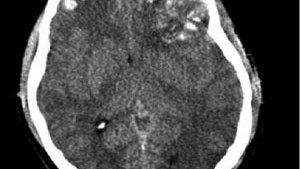
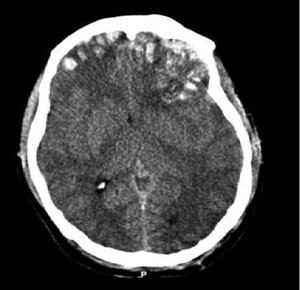
TBI can cause inflammation and swelling or bleeding from damage to brain tissue and blood vessels. Bleeding may occur within the brain (an intracranial hemorrhage) or the protective layers that surround it, such as an epidural, subdural or subarachnoid hemorrhage.

TBI can cause inflammation and swelling or bleeding from damage to brain tissue and blood vessels.
TBI can cause inflammation and swelling or bleeding from damage to brain tissue and blood vessels. (Photo courtesy of Rehman T, Ali R, Tawil I, Yonas H)
RELATED ARTICLES
Stroke: 10 things you need to know to save lives
STEMI: 10 things you need to know to save lives
Trauma: 10 things you need to know to save lives
The brain is tightly enclosed within the skull. Bleeding and inflammation cause a rise in intracranial pressure (ICP), which squeezes and damages brain structures, within that space. As ICP increases, sections of the brain may shift to different areas within the skull, or into the opening where the spinal cord enters the cranium, through a process known as herniation. The higher and longer ICP rises, the degree of permanent disability and likelihood of death increases.

Signs of increased ICP include altered mental status, unequal or nonreactive pupils, posturing, or seizures, as well as bradycardia and hypertension (Cushing's Phenomenon).

2. SLOW DOWN THE DAMAGE FROM SECONDARY BRAIN INJURY
Brain tissue does not regenerate, thus damage from the initial insult is generally permanent. The subsequent edema and bleeding from the primary injury then spreads to damage other areas of the brain, and treatment is aimed at limiting this secondary injury. Through airway protection, oxygenation or ventilation, blood pressure maintenance, and transport to a trauma center, EMS plays a vital role in stopping this cascade.

3. HEAD INJURED PATIENTS ARE UNRELIABLE HISTORIANS
Patients with TBI may be confused, combative, or unresponsive. They may be unable able to follow commands or report pain, and concurrent drug or alcohol intoxication makes assessment even more difficult. Assume that altered mentation is caused by a head injury instead of intoxication.

Rely on inspection, auscultation, and palpation to rule in other injuries, such as a change in the patient's facial expression when their abdomen is palpated. Remember that internal injuries cannot be ruled out, particularly those involving the spinal cord, so take spinal precautions in any patient with a head injury and altered mental status.

4. SOUND THE ALARM AT THE TRAUMA CENTER
Treatment for head-injured patients requires rapid assessment, imaging with a CT scan, and possibly neurosurgery. Time is brain, and the chance of disability or death increases with any delay.

Transporting patients to trauma centers that offer neurological services, and early activation of teams at these centers, streamlines the process to definitive care. Know which hospitals these are, initiate transport as quickly as possible, and alert the hospital to prepare staff and equipment for your arrival.

5. AIRWAY COMPROMISE FROM TBI COMES IN MANY FORMS
Unconscious head-injured patients may lose muscle tone in their jaw, and their tongue may obstruct the airway. The gag reflex may also be compromised in TBI patients, which increases the risk of aspiration from vomit or blood. Clenched teeth, known as trismus, is another common finding that makes position and suctioning airway secretions difficult. Attempt to open the airway with a jaw thrust. Use an oral or nasal airway if the patient will tolerate it, position the patient on their left side to help prevent aspiration, and suction secretions.

Endotracheal intubation is the definitive airway management for TBI, often after sedation and paralysis with RSI. This procedure carries considerable risk, and whether it should be done by ground EMS crews is controversial. Remember that the goal for airway management should be to use the least invasive means to maintain a clear path for oxygenation and ventilation.

6. HYPOXIA AND HYPOTENSION ARE HARMFUL – EVEN FOR A SHORT TIME
Irreversible brain damage can occur in TBI patients after only four minutes of anoxia, which can be caused by a compromised airway, altered respiratory patterns from the head injury, or lung injury in multi-system trauma. Use pulse-oximetry, skin color, and respiratory rate to assess adequate oxygenation. Administer oxygen via nasal cannula, non-rebreather mask, or bag valve to maintain a pulse-ox reading of at least 95%.

Cerebral oxygen delivery is also compromised by hypotension, which is associated with poor outcomes after even transient episodes. Hypotension caused directly by a head injury is a rare and ominous finding; it is more often caused by shock associated with other injuries. Administer IV fluids and titrate blood pressure to 90 – 100 mmHG systolic in head injured patients who are hypotensive.

7. VENTILATING TOO FAST REDUCES BLOOD FLOW TO THE BRAIN
As harmful as hypoxia is in TBI, hypocapnea from excessive ventilation is harmful as well. A higher respiratory rate decreases the amount of CO2 in the blood, which triggers cerebral vasoconstriction and less oxygen delivery. Hyperventilation of head injuries has been associated with poor outcomes.

When assisted ventilation is necessary in isolated head injuries, follow your local protocols regarding use of end-tidal CO2 (EtCO2) monitoring for a head-injured patient.

Shock from multisystem trauma can also cause a low EtCO2 reading, in which case it should not be used to guide ventilation. If capnography is not available, or if the patient may be in shock from other injuries, ventilate adults at 10 breaths per minute. There is one exception...

8. HYPERVENTILATION MAY SLOW HERNIATION
In cases of suspected ICP being so high that portions of the brain may be shifting out of the cranium, the benefit of temporarily reducing cerebral blood with mild hyperventilation may outweigh the harm from less oxygen delivery. Hyperventilation is ONLY indicated for patients who are posturing or have no motor response, have unequal or dilated and nonreactive pupils, or bradycardia and hypotension. Titrate the respiratory rate to maintain an EtCO2 reading between 30 and 35 (in the absence of multi-system trauma), or 20 breaths per minute.

9. YOU MAY HAVE A CONCUSSION
A concussion is a transient change in mentation after blunt head trauma. It can cause retrograde amnesia, and patients often repeatedly ask the same question after being given an answer. It can also cause a temporary loss of consciousness, disorientation, incoherent speech, or lack of coordination. Diagnosis of a concussion is made after a CT scan shows no structural abnormalities associated with these symptoms - not in the field.

While concussion symptoms typically resolve after a few hours or days, severe or multiple concussions can cause headaches, dizziness, depression, and difficulty concentrating for weeks. Especially worrisome is a secondary impact syndrome, where a patient sustains a second concussion before recovering from the first. This can cause rapid cerebral edema and herniation, and has a high mortality rate. Athletes with a head injury should not return to play until after symptoms have completely resolved.

10. BE ON THE LOOKOUT FOR BLOOD THINNERS
Patients taking blood thinners, including Coumadin and Plavix, are at risk of severe bleeding into the brain from relatively minor head injuries. Learn what medications these are, and factor the patient's medication list into your assessment. Signs and symptoms of intracranial bleeding may be delayed, especially in elderly people.

Assume that an altered mental status is a change from baseline unless proven otherwise, and perform a cranial nerve exam to detect subtle signs of closed head injury. Any patient taking a blood thinner who bumps their head should be evaluated at the hospital, no matter how minor their injury appears.

BONUS: AN OUNCE OF PREVENTION CAN SAVE A TON OF HEADACHES
Promoting bike helmet use is one way for EMS agencies to prevent the need to encounter one of the situations listed above. EMS providers are also at risk for head injuries in the back of a moving ambulance. Helmet use is standard in helicopters, and EMS-specific helmets are now available for use on ground ambulances. Consider how easily a concussion may occur from even a minor ambulance crash, and how easily they can be prevented.

Brain_trauma_CT.jpg?w=1600&format=jpg&qu

Proper assessment, treatment, and transport of patients with traumatic brain injury saves lives, here's how
Attachments:
View on the web

Transoral robotic submandibular gland transposition to reconstruct radical tonsillar resection defects

Greek DailyNews shared this article with you from Inoreader

Abstract

Significant dysphagia, pain, and risk of bleeding occur after transoral robotic surgery (TORS) radical tonsillectomy. We present a novel surgical technique utilizing robotically assisted submandibular gland transposition (SMGT) to reconstruct the radical tonsillar defect. A 48‐year‐old male with p16+ tonsillar squamous cell carcinoma underwent deep TORS radical tonsillectomy, contralateral tonsillectomy, ipsilateral neck dissection, and TORS‐assisted reconstruction of the radical defect with ipsilateral SMGT. Postoperatively, the patient experienced minimal pain and was discharged on postoperative day (POD) 3 tolerating a soft diet. There were no episodes of postoperative bleeding. This procedure was performed in five other cases as well. Transoral robotic SMGT can be used successfully to repair deep TORS radical tonsillectomy defects and may theoretically reduce dysphagia, pain, and the risk of hemorrhage.

View on the web