Αρχειοθήκη ιστολογίου

Αλέξανδρος Γ. Σφακιανάκης
ΩτοΡινοΛαρυγγολόγος
Αναπαύσεως 5
Άγιος Νικόλαος Κρήτη 72100
2841026182
6032607174

Τετάρτη 3 Φεβρουαρίου 2021

Comparison of peri‐implant clinical outcomes of digitally customized and prefabricated abutments: A systematic review and meta‐analysis

xloma.fota13 shared this article with you from Inoreader

Abstract

Background

Digitally customized abutments are increasingly used in contemporary implant prosthodontics.

Purpose

This systematic review and meta‐analysis aimed at comparing the peri‐implant clinical outcomes of digitally customized and prefabricated abutments.

Materials and methods

The search strategies included electronic databases (PubMed, Embase, Scopus, and Cochrane clinical trials database) and related journals up to September, 2020. A qualitative and quantitative synthesis was performed on data extracted from the included studies.

Results

Three RCTs (number of patients = 120; number of dental implants = 120) and two prospective cohort studies (number of patients = 144; number of dental implants = 144) with one to three‐year follow‐up periods were included. The quantitative analyses did not demonstrate a significant difference between digitally customized and prefabricated abutments for peri‐implant pocket depth (P = 0.62), plaque index (P = 0.67), bleeding on probing (P = 0.43), keratinized mucosa width (P = 0.75), and pink aesthetic score (P = 0.30) at one‐year follow‐up visit. The qualitative analyses for marginal bone level change, calculus accumulation, implant survival rate, implant success rate, white aesthetic score, and patient‐reported outcomes did not demonstrate a significant difference between two groups during 1 to 3‐year follow‐up visits.

Conclusion

The current data do not provide evidence of significant differences between two abutment fabrication methods in terms of peri‐implant clinical outcomes within short‐term period (CRD42020170807).


View on the web

Clinical, immunophenotypic and genomic findings of NK lymphoblastic leukemia: a study from the Bone Marrow Pathology Group

xloma.fota.13 shared this article with you from Inoreader

Modern Pathology, Published online: 01 February 2021; doi:10.1038/s41379-021-00739-4

Clinical, immunophenotypic and genomic findings of NK lymphoblastic leukemia: a study from the Bone Marrow Pathology Group
View on the web

Novel, emerging and provisional renal entities: The Genitourinary Pathology Society (GUPS) update on renal neoplasia

xloma.fota.13 shared this article with you from Inoreader

Modern Pathology, Published online: 01 February 2021; doi:10.1038/s41379-021-00737-6

Novel, emerging and provisional renal entities: The Genitourinary Pathology Society (GUPS) update on renal neoplasia
View on the web

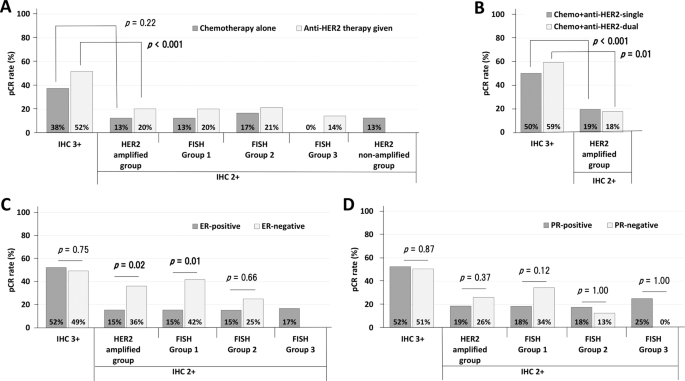
Predictors of pathological complete response to neoadjuvant treatment and changes to post-neoadjuvant HER2 status in HER2-positive invasive breast cancer

xloma.fota.13 shared this article with you from Inoreader

41379_2021_738_Fig1_HTML.png

Modern Pathology, Published online: 01 February 2021; doi:10.1038/s41379-021-00738-5

Predictors of pathological complete response to neoadjuvant treatment and changes to post-neoadjuvant HER2 status in HER2-positive invasive breast cancer
View on the web

Are water precautions necessary after tympanostomy tube placement? A cadaver study.

xloma.fota.13 shared this article with you from Inoreader
Related Articles

Are water precautions necessary after tympanostomy tube placement? A cadaver study.

Int J Pediatr Otorhinolaryngol. 2021 Jan 23;143:110632

Authors: Sanchez A, Arom G, Perez HA, Royal L, O-Lee TJ

Abstract
OBJECTIVES: To determine whether Armstrong pressure equalization tubes allow passage of water into the middle ear with complete submersion in water up to 76 cm for 2 min.
METHODS: 10 adult cadaver heads were first assessed for the presence of fluid in both middle ears with zero-degree rigid endoscopes, after being submerged for 2 min in a plastic receptacle filled with 76 cm of water. A 25% perforation was then made in the tympanic membrane of one ear. A myringotomy was then made in the tympanic membrane of the contralateral ear, with the placement of a beveled Armstrong pressure equalization tube. The head was then submerged again for 2 min. Both ears were then examined for the presence of fluid in the middle ear using a rigid endoscope and with suction.
RESULTS: Eight out of ten (80%) of the heads showed the presence of fluid in the middle ear on the perforation side after submersion, whereas none of the heads showed fluid in the middle ear on the side with the pressure equalization tube.
CONCLUSIONS: At depths of 76 cm, total submersion in water for 2 min does not facilitate the passage of water into the middle ear via an Armstrong pressure equalization tube.

PMID: 33517069 [PubMed - as supplied by publisher]

View on the web

Breast cancer with neuroendocrine differentiation: an update based on the latest WHO classification

xloma.fota.13 shared this article with you from Inoreader

Modern Pathology, Published online: 02 February 2021; doi:10.1038/s41379-021-00736-7

Breast cancer with neuroendocrine differentiation: an update based on the latest WHO classification
View on the web

Fentanyl or fentanyl for sedation in mechanically ventilated adults with sepsis

xloma.fota.13 shared this article with you from Inoreader

morphinepoppy-scaled.jpg?fit=2560%2C814&

The MENDS2 trial was intended as a study comparing dexmedetomidine to propofol. However, the doses of these medications used in the study weren't high enough to be impactful. In retrospect, the study may actually be an investigation of how clinicians approach the agitated intubated patient – potentially revealing an over-reliance on opioid infusions.

EMCrit Project by Josh Farkas.

View on the web