Αρχειοθήκη ιστολογίου

Αλέξανδρος Γ. Σφακιανάκης
ΩτοΡινοΛαρυγγολόγος
Αναπαύσεως 5
Άγιος Νικόλαος Κρήτη 72100
2841026182
6032607174

Τετάρτη 27 Απριλίου 2022

Effectiveness of mRNA-based vaccines during the emergence of SARS-CoV-2 Omicron variant

alexandrossfakianakis shared this article with you from Inoreader
Abstract
Background
We evaluated effectiveness of mRNA-based vaccines following emergence of SARS-CoV-2 Omicron variant.
Methods
Recipients of a third dose of BNT162b2 or mRNA-1273 ≥ 180 days after the primary series were matched to primary series recipients and unvaccinated persons. Participants were followed from December 1, 2021 to March 12, 2022. Outcomes were documented SARS-CoV-2 infection, COVID-19 hospitalization, and COVID-19 death. Effectiveness was calculated from 100-day risks estimated with the Kaplan-Meier estimator.
Results
BNT162b2 and mRNA-1273 groups respectively included 221,267 and 187,507 third dose recipients matched to equal numbers of primary series recipients and unvaccinated persons. Compared to no vaccination, effectiveness of a third dose of BNT162b2 was 47.8% (95% confidence interval [CI]: 45.2-50.3), 81.8% (95% CI 79.2-84.2), and 89.6% (95% CI 85.0-93.6) against documented infection, hospitalizat ion, and death, respectively. Effectiveness of a third dose of BNT162b2 compared to the primary series was 30.1% (95% CI 26.2-33.7), 61.4% (95% CI 55.0-67.1), and 78.8% (95% CI 67.9-87.5) against documented infection, hospitalization, and death, respectively.Effectiveness of a third dose of mRNA-1273 compared to no vaccination was 61.9% (95% CI 59.4-64.4), 87.9% (95% CI 85.3-90.2), and 91.4% (95% CI 86.4-95.6) against documented infection, hospitalization, and death, respectively. Effectiveness of a third dose of mRNA-1273 compared to the primary series was 37.1% (95% CI 32.2-41.7), 63.5% (95% CI 53.7-71.6), and 75.0% (95% CI 55.4-88.0) against documented infection, hospitalization, and death, respectively.
Conclusions
BNT162b2 and mRNA-1273 were effective against COVID-19 following emergence of Omicron variant. A third dose provided additional protection over the primary series.

View on the web

Rab22a promotes the proliferation, migration, and invasion of lung adenocarcinoma via up-regulating PI3K/Akt/mTOR signaling pathway

alexandrossfakianakis shared this article with you from Inoreader

1-s2.0-S0014482722X00098-cov150h.gif

Publication date: Available online 27 April 2022

Source: Experimental Cell Research

Author(s): Jinping Wang, Xue Luo, Jinxi Lu, Xi Wang, Yuan Miao, Qingchang Li, Liang Wang

View on the web

The intrinsic and microenvironmental features of diffuse midline glioma; implications for the development of effective immunotherapeutic treatment strategies

alexandrossfakianakis shared this article with you from Inoreader
Abstract
Diffuse midline glioma (DMG), including those of the brainstem (diffuse intrinsic pontine glioma), are pediatric tumors of the central nervous system (CNS). Recognized as the most lethal of all childhood cancers, palliative radiotherapy remains the only proven treatment option, however, even for those that respond, survival is only temporarily extended. DMG harbor an immunologically 'cold' tumor microenvironment (TME) with few infiltrating immune cells. The mechanisms underpinning the cold TME are not well understood. Low expression levels of immune checkpoint proteins, including PD-1, PD-L1 and CTLA-4, are recurring features of DMG and likely contribute to the lack of response to immune checkpoint inhibitors (ICIs). The unique epigenetic signatures (including stem cell-like methylation patterns), a low tumor mutational burden, and recurring somatic mutations (H3K27M, TP53, ACVR1, MYC and PIK3CA), possibly play a role in the reduced efficacy of traditional immunotherapies. Therefore, to circumvent the lack of efficacy thus far seen for the use of ICIs, adoptive cell transfer (including chimeric antigen receptor T cells) and the use of oncolytic viruses, are currently being evaluated for the treatment of DMG. It remains an absolute imperative that we improve our understanding of DMG's intrinsic and TME features if patients are to realize the potential benefits offered by these sophisticated treatments. Herein, we summarize the limitations of immunotherapeutic approaches, highlight the emerging safety and clinical efficacy shown for sophisticated cell-based therapies, as well as the evolving knowledge underpinning the DMG-immune axis, to guide in the development of immunotherapies that we hope will improve outcomes.
View on the web

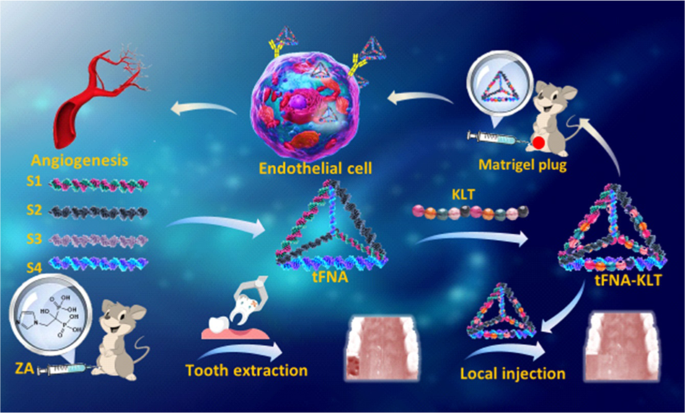
Tetrahedral framework nucleic acid carrying angiogenic peptide prevents bisphosphonate-related osteonecrosis of the jaw by promoting angiogenesis

alexandrossfakianakis shared this article with you from Inoreader

41368_2022_171_Figa_HTML.png

International Journal of Oral Science, Published online: 27 April 2022; doi:10.1038/s41368-022-00171-7

View on the web

Usability Experience of a Personal Sleep Monitoring Device to Self-manage Sleep Among Persons 65 Years or Older With Self-reported Sleep Disturbances

alexandrossfakianakis shared this article with you from Inoreader
imageIncreasingly, persons with self-reported health symptoms are using mobile health technologies to better understand, validate, and manage their symptoms. These off-the-shelf devices primarily utilize actigraphy to estimate sleep and activity. The purpose of this study was to describe qualitatively the experience of using a personal sleep monitoring device for sleep self-management in adults 65 years or older with self-reported sleep disturbances. This study followed a hybrid qualitative design using deductive and emergent coding derived from open-ended interviews (n = 25) after a period of 4 weeks using a wearable personal sleep monitoring device. Results expanded existing theoretical models on usability with the theme of personal meaning in the interaction between health and self-monitoring technology that were associated with age and technology use, privacy, and capability. Future studies for sleep health self-management and personally tailored interventions using personal sleep monitoring devices should continue to collect qualitative information in extending the understanding of user experience across different symptom clusters, such as sleep disturbances, that manifest more commonly in older age populations. This research is important for application in the use of mobile health technologies for nursing led health self-management interventions.
View on the web

Τρίτη 26 Απριλίου 2022

Disclosure of suicidal thoughts and behaviors: The impact of suicide event type

alexandrossfakianakis shared this article with you from Inoreader

Abstract

Objectives

Despite its importance, limited work has investigated the nuances of suicidal thoughts and behavior self-disclosure. The present study aimed to examine potential differences in self-disclosure based on whether an individual has disclosed suicidal thinking versus behavior.

Methods

Two hundred and four participants having disclosed their suicidal thoughts or behaviors completed a battery of online questionnaires assessing several key aspects of disclosure (i.e., disclosure recipient, perceived helpfulness of disclosure, impact on treatment seeking), as it pertained to both one's first and overall disclosure experiences.

Results

Individuals who disclosed a suicide attempt, versus ideation, were more likely to have disclosed to a formal support (i.e., health professional) and to seek professional help following disclosure. No significant group differences in perceived helpfulness of experiences were found.

Conclusion

It may be beneficial to increase opportunities for disclosure of suicidal thinking. Overall, disclosures were perceived as helpful and may not impede future help-seeking behavior.

View on the web

The response of dual‐species bacterial biofilm to 2% and 5% NaOCl mixed with etidronic acid: a laboratory real‐time evaluation using optical coherence tomography.

alexandrossfakianakis shared this article with you from Inoreader

Abstract

Aim

The addition of etidronic acid (HEDP) to sodium hypochlorite (NaOCl) could increase the antibiofilm potency of the irrigant, while maintaining the benefits of continuous chelation. Studies conducted so far have shown that mixing HEDP with NaOCl solutions of relatively low concentration does not compromise the antibiofilm efficacy of the irrigant. However, the working lifespan of NaOCl may decrease resulting in a reduction of its antibiofilm efficacy over time (efficiency). In this regard, continuous irrigant replenishment needs to be examined. This study investigated the response of a dual-species biofilm when challenged with 2% and 5% NaOCl mixed with HEDP for a prolonged timespan and under steady laminar flow.

Methodology

Dual-species biofilms comprised of Streptococcus oralis J22 and Actinomyces naeslundii T14V-J1 were grown on human dentine discs in a constant depth film fermenter (CDFF) for 96 h. Biofilms were treated with 2% and 5% NaOCl, alone or mixed with HEDP. Irrigants were applied under steady laminar flow for 8 min. Biofilm response was evaluated by means of optical coherence tomography (OCT). Biofilm removal, biofilm disruption, rate of biofilm loss and disruption as well as bubble formation were assessed. One-way ANOVA, Wilcoxon's signed-rank test and Kruskal-Wallis H test were performed for statistical analysis of the data. The level of significance was set at a ≤ 0.05.

Results

Increasing NaOCl concentration resulted in increased biofilm removal and disruption, higher rate of biofilm loss and disruption and increased bubble formation. Mixing HEDP with NaOCl caused a delay in the antibiofilm action of the latter, without compromising its antibiofilm efficacy.

Conclusions

NaOCl concentration dictates the biofilm response irrespective of the presence of HEDP. The addition of HEDP resulted in a delay in the antibiofilm action of NaOCl. This delay affects the efficiency, but not the efficacy of the irrigant over time.

View on the web