Αρχειοθήκη ιστολογίου

Αλέξανδρος Γ. Σφακιανάκης
ΩτοΡινοΛαρυγγολόγος
Αναπαύσεως 5
Άγιος Νικόλαος Κρήτη 72100
2841026182
6032607174

Τρίτη 3 Ιανουαρίου 2023

Automating the treatment planning process for 3D‐conformal pediatric craniospinal irradiation therapy

alexandrossfakianakis shared this article with you from Inoreader

Abstract

Purpose

Pediatric patients with medulloblastoma in low- and middle-income countries (LMICs) are most treated with 3D-conformal photon craniospinal irradiation (CSI), a time-consuming, complex treatment to plan, especially in resource-constrained settings. Therefore, we developed and tested a 3D-conformal CSI autoplanning tool for varying patient lengths.

Methods and materials

Autocontours were generated with a deep learning model trained:tested (80:20 ratio) on 143 pediatric medulloblastoma CT scans (patient ages: 2–19 years, median = 7 years). Using the verified autocontours, the autoplanning tool generated two lateral brain fields matched to a single spine field, an extended single spine field, or two matched spine fields. Additional spine subfields were added to optimize the corresponding dose distribution. Feathering was implemented (yielding nine to 12 fields) to give a composite plan. Each planning approach was tested on six patients (ages 3–10 years). A pediatric radiation oncologist assessed clinical acceptability of each autoplan.

Results

The autocontoured structures' average Dice similarity coefficient ranged from .65 to .98. The average V95 for the brain/spinal canal for single, extended, and multi-field spine configurations was 99.9% ± 0.06%/99.9% ± 0.10%, 99.9% ± 0.07%/99.4% ± 0.30%, and 99.9% ± 0.06%/99.4% ± 0.40%, respectively. The average maximum dose across all field configurations to the brainstem, eyes (L/R), lenses (L/R), and spinal cord were 23.7 ± 0.08, 24.1 ± 0.28, 13.3 ± 5.27, and 25.5 ± 0.34 Gy, respectively (prescription = 23.4 Gy/13 fractions). Of the 18 plans tested, all were scored as clinically acceptable as-is or clinically acceptable with minor, time-efficient edits preferred or required. No plans were scored as clinically unacceptable.

Conclusion

The autoplanning tool successfully generated pediatric CSI plans for varying patient lengths in 3.50 ± 0.4 minutes on average, indicating potential for an efficient planning aid in a resource-constrained settings.

View on Web

Promising applications of human-derived saliva biomarker testing in clinical diagnostics

alexandrossfakianakis shared this article with you from Inoreader

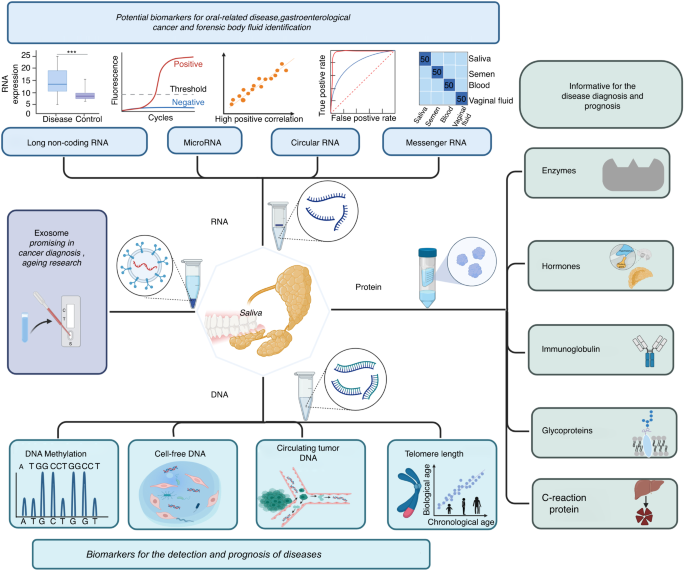
41368_2022_209_Fig1_HTML.png

International Journal of Oral Science, Published online: 04 January 2023; doi:10.1038/s41368-022-00209-w

Promising applications of human-derived saliva biomarker testing in clinical diagnostics
View on Web

Temporal Trends in Variability of Respirable Dust and Respirable Quartz Concentrations in the European Industrial Minerals Sector

alexandrossfakianakis shared this article with you from Inoreader
Abstract
While between- and within-worker variability have been studied quite extensively, hardly any research is available that examines long-term trends in the variability of occupational exposure. In this first study on trends in occupational exposure variability temporal changes in the variability of respirable dust and respirable quartz concentrations within the European industrial minerals sector were demonstrated. Since 2000 the European Industrial Minerals Association's Dust Monitoring Program (IMA-DMP) has systematically collected respirable dust and respirable quartz measurements. The resulting IMA-DMP occupational exposure database contains at present approximately 40 000 personal full-shift measurements, collected at 177 sites owned by 39 companies, located in 23 European countries. Repeated measurements of workers performing their duties within a specific site-job-campaign combination allowed estimation of within- and between-worker variabi lity in exposure concentrations. Overall day-to-day variability predominated the between-worker variability for both respirable dust concentrations and quartz concentrations. The within-worker variability in concentrations by job was two to three times higher for respirable quartz than for respirable dust. The median between-worker variability in respirable dust concentrations was low and further reduced over time. For quartz concentrations the same phenomenon albeit somewhat less strong was observed. In contrast, for the within-worker variability in concentrations downward and upward temporal trends were apparent for both respirable dust and respirable quartz. The study shows that the (relative) size of temporal variability is large and unpredictable and therefore regular measurement campaigns are needed to ascertain compliance to occupational exposure limit values.
View on Web

Δευτέρα 2 Ιανουαρίου 2023

Small Molecule-mediated Disruption of Ribosome Biogenesis Synergizes With FGFR Inhibitors to Suppress Glioma Cell Growth

alexandrossfakianakis shared this article with you from Inoreader
Abstract
Background
High-grade gliomas are malignant brain tumors characterized by aggressiveness and resistance to chemotherapy. Prognosis remains dismal, highlighting the need to identify novel molecular dependencies and targets. Ribosome biogenesis (RiBi), taking place in the nucleolus, represents a promising target as several cancer types rely on high RiBi rates to sustain proliferation. Publicly available transcriptomics data of glioma patients revealed a positive correlation between RiBi rates and histological grades. We, therefore, hypothesized that glioma cells could be susceptible to RiBi inhibition.
Methods
Transcriptomics data from glioma patients were analyzed for RiBi-related processes. BMH-21, a small molecule inhibitor of RNA polI transcription, was tested in adult and pediatric high-grade glioma cell lines and a zebrafish transplant model. Cellular phenotypes were evaluated by transcriptomics, cell cycle analysis, and vi ability assays. A chemical synergy screen was performed to identify drugs potentiating BMH-21-mediated effects.
Results
BMH-21 reduced glioma cell viability, induced apoptosis, and impaired the growth of transplanted glioma cells in zebrafish. Combining BMH-21 with TMZ potentiated cytotoxic effects. Moreover, BMH-21 synergized with FGFR inhibitor Erdafitinib, a top hit in the chemical synergy screen. RiBi inhibition using BMH-21, POLR1A siRNA, or Actinomycin D revealed engagement of the FGFR-FGF2 pathway. BMH-21 downregulated FGFR1 and SOX2 levels, whereas FGF2 was induced and released from the nucleolus.
Conclusions
This study conceptualizes the implementation of RiBi inhibition as a viable future therapeutic strategy for glioma and reveals an FGFR connection to the cellular response upon RiBi inhibition with potential translational value.
View on Web

Πέμπτη 29 Δεκεμβρίου 2022

Diagnosis and Management of Vocal Complications after Chondrolaryngoplasty

alexandrossfakianakis shared this article with you from Inoreader
Diagnosis and Management of Vocal Complications after Chondrolaryngoplasty

Anterior commissure dislocation should be suspected with signs of vocal impairment after chondrolaryngoplasty. Following proper diagnosis, resuspension of the anterior commissure via feminization laryngoplasty approach can be an effective reparative technique.


Objective

Transfeminine patients (transwomen/feminine nonbinary folks assigned male at birth) can undergo chondrolaryngoplasty ("tracheal shave") to feminize their neck appearance. While isolated cases of vocal complications have been reported following the procedure, aggregated outcomes have not been quantitatively studied. We present acoustic and stroboscopic data to describe a patient cohort with vocal complications after chondrolaryngoplasty and discuss reparative surgical technique.

Methods

Subjective and objective data, including videostroboscopy, were collected from patients with voice complaints after chondrolaryngoplasty. Dislocated anterior commissures were reconstructed with feminization laryngoplasty. Postoperative voice data were recorded and statistically compared to preoperative data using paired t-tests.

Results

On consecutive chart review, of the 94 transfeminine women with prior outside history of chondrolaryngoplasty, 27 (29%) reported chronic postoperative hoarseness, deepened pitch, or loss of upper register. On endoscopy, short, lax vocal folds with persistent anterior glottic gap and phase asymmetry were commonly noted; anterior commissure dislocation was confirmed in-office by using needle localization through absent thyroid cartilage. After open resuspension of the anterior commissure with feminization laryngoplasty, post-repair modal-speaking, minimum, and maximum fundamental frequencies (F0) increased on average by 7, 8, and 5 semitones, respectively (p < 0.01), when compared to pre-repair values. On average, perioperative maximum phonation time did not change significantly (p = 0.15). Average self-assessment of vocal femininity increased by 48% (p < 0.01).

Conclusion

Anterior commissure dislocation should be suspected with signs of vocal impairment after chondrolaryngoplasty. Following proper diagnosis, resuspension of the anterior commissure via feminization laryngoplasty approach can be an effective reparative technique.

Level of Evidence

This work represents a 2011 OCEBM Level 4 evidence as a case series Laryngoscope, 2022

View on Web

Reassessing Endotracheal Tube Size in Critically Ill Patients

alexandrossfakianakis shared this article with you from Inoreader

Otolaryngology.png

To the Editor We read with great interest the article by Esianor and colleagues on endotracheal tube (ETT) size in critically ill patients. Laryngotracheal injuries after invasive mechanical ventilation range from reversible pressure injuries to permanent damage, scarring, fistulas, and transmural lesions. Endotracheal tubes larger than 7.0 mm pose greater risk of laryngeal injury, and ETTs larger than 7.5 mm are often selected for critically ill patients in efforts to improve airflow resistance, avoid blockage, and facilitate procedural int erventions. Little is known as to whether larger ETTs improve recovery. Esianor and colleagues found no difference in 30-day all-cause in-hospital survival between patients with small, appropriate, or large-for-height endotracheal tubes. If larger tubes do not improve survival, is survivorship a better focus? Even with optimally sized tubes, translaryngeal intubation carries risks for impaired speech, swallowing, and airway protection. The investigation presented new questions around selection of ETT size, and has several implications for current practice and future investigation.
View on Web

Τετάρτη 28 Δεκεμβρίου 2022

three-dimensional airway changes after fibula flap reconstruction for benign and malignant tumours in the anterior mandible

alexandrossfakianakis shared this article with you from Inoreader
Surgical treatment of tumours in the anterior mandible and surrounding tissues may result in defects which can be restored by a fibula free flap. The upper airway may change during this process. The purpose of this retrospective study was to evaluate upper airway changes after fibula free flap reconstruction. A total of 37 patients who underwent anterior mandibulectomy and fibula free flap reconstruction between 2012 and 2020 were recruited. Patients with benign and malignant tumours involving the anterior mandible were included. (Source: International Journal of Oral and Maxillofacial Surgery)
View on Web